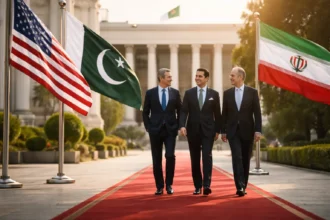
The Middle Eastern region is stuck in a vicious cycle of instability because of continues violent exchanges between Israel and Iran, as well as the United States and Iran. Despite ongoing mediatory efforts, especially by Pakistan, to secure a permanent ceasefire and an agreement between hostilities, the active skirmishes continue to sabotage these initiatives.
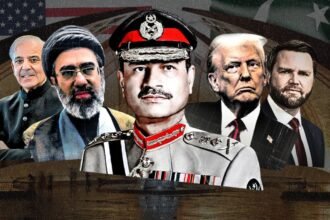
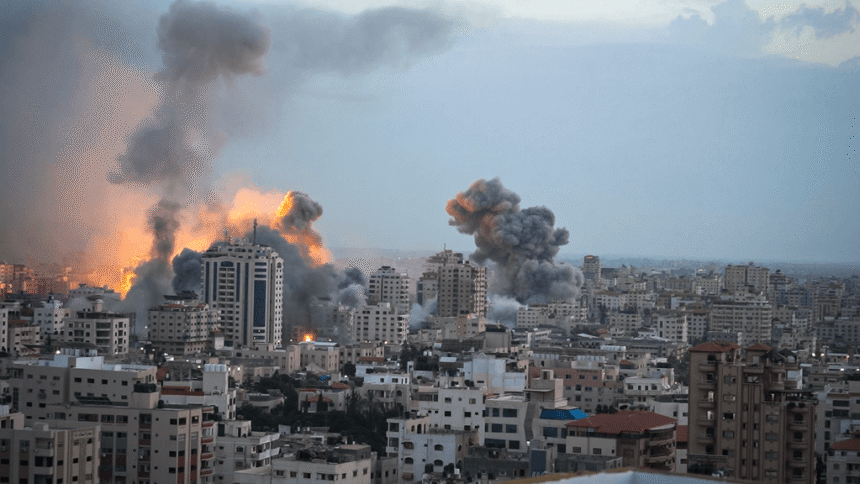
In the first week of June, Israel and Iran have resumed direct strikes and situation might escalate again. Following Iranian missile attacks over Israel’s strikes in Lebanon, Israel has responded with striking a petrochemical complex in Mahshahr. However, the US President Donald Trump has made explicit calls for restraint and has urged Prime Minister Benjamin Netanyahu to avoid retaliation. He further asserted that he is calling shots an do not the Israeli leadership, therefore, insisting that these skirmishes should not derail broader peace talks aimed at ending the conflict.
As the regional situation remains fraught with tensions, it is yet to see whether a ceasefire can be considered genuine when military actions continue unabated. Israel has continued to maintain its military operations in Lebanon against Hezbollah which remains a critical friction point between Iran and Israel. Tehran always links the success of peace talks with a stable ceasefire in Lebanon, which has further complicated the diplomatic landscape.
As an outcome of this chaotic situation, the economic implications are immediate with oil prices responding to be heightened tensions. The oil has climbed above $96 per barrel over potential disruptions in the most vital energy route of the Strait of Hormuz.
Furthermore, the uncertainty in stability-instability paradox of the Middle East is leading towards the gradual erosion of confidence in diplomacy. The difference between an active war and a truce has blurred as the US and Iran continue to trade strikes with a stalled peace process. Both Washington and Tehran desire to reach an agreement, but the irrevocable strikes carried out by Israel are halting the peace process to conclude and serves to deepen mutual mistrust.
Therefore, the interconnectedness of regional conflicts is complicating the peace efforts. The confrontation in southern Lebanon, strikes in the Gulf, or an attack on any state infrastructure can escalate into an all-out war. Pakistan’s unprecedented efforts to bring conflicting parties on the table can succeed only if all parties show restraint and no one dares to act as a spoiler.