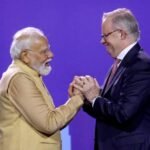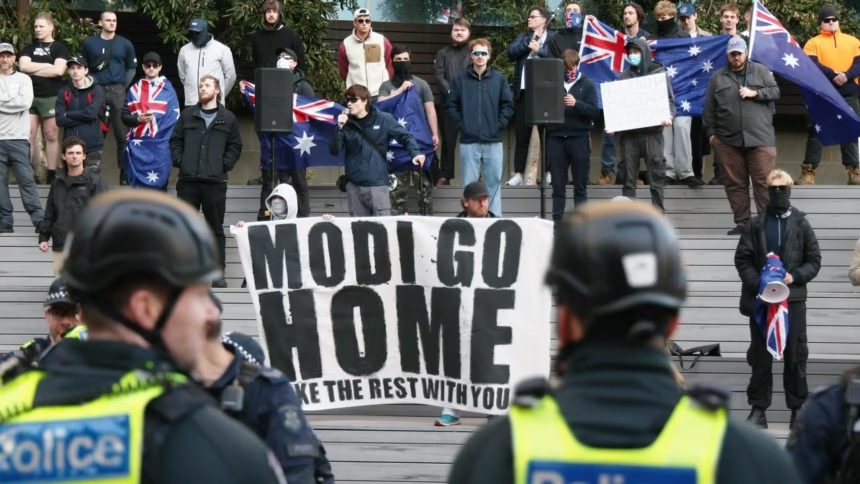
Indian Prime Minister Narendra Modi’s first visit to Australia in last three years brought pageantry, a uranium export deal with Canberra, and a large community reception in Melbourne alongside PM Anthony Albanese. It also brought open protest — demonstrators holding “Modi Go Home” banners, and groups like the Alliance Against Islamophobia mobilizing against what they called bigotry and persecution, including anti-Muslim hate and caste oppression. Amnesty International urged the Australian government to press Modi on India’s human rights record during the bilateral talks. Supporters, meanwhile, framed the visit as a win for bilateral ties and a source of diaspora pride — and that reading isn’t baseless; the trip did produce real economic and strategic outcomes.
Well done ! Australia! .🙌 pic.twitter.com/WaPKAtuuxS
— Dhruvaa (@ripper_dhruvaa) July 10, 2026
The Policy Behind the Protest
But the criticism isn’t manufactured outrage — it’s grounded in real policy. Central to it is India’s Citizenship Amendment Act (CAA), passed in 2019 and finally implemented in 2024. The law fast-tracks Indian citizenship for Hindu, Sikh, Buddhist, Jain, Parsi, and Christian migrants who fled Pakistan, Bangladesh, and Afghanistan before the end of 2014 — but pointedly excludes Muslims from the same countries. It marked the first time religion was explicitly written into India’s citizenship law, and it drew global criticism. Communal clashes tied to the law’s passage killed 53 people in Delhi, most of them Muslim, and the UN’s human rights office called the law a breach of India’s international obligations. Critics also point to the law’s selective logic: persecuted Muslim minorities like Pakistan’s Shias and Ahmadis get no protection under it, nor do Tamil Hindus fleeing Sri Lanka — undercutting the claim that the law is purely humanitarian.
The Risk of a Rally That Speaks for a Diaspora That Didn’t Ask to Be Spoken For
This is where the risk lies. A large, high-profile political rally for Modi in a country like Australia — where imported foreign political spectacle is unusual — doesn’t just flatter him. It stages ordinary Indian-Australians as backdrop to a leader whose government stands accused of institutionalizing religious discrimination at home.
As a future permanent resident of Australia, who lived there for 3 years and graduated, I can confidently say Australia is not a political country where people welcome huge political gatherings, foreign countries' rhetoric, or massive foreign cultural political pushes. Modi…
— SHREE RAM (@JAWAHARNEHR) July 9, 2026
Nothing has to go wrong yet for this to be a problem: the moment the rally is broadcast as a diaspora-wide embrace, the line between “the Indian community” and “supporters of the BJP’s policies” starts to blur in the public eye. That blur doesn’t ask permission from the Muslim, Sikh, or secular Hindu Indian-Australians who don’t share that politics — it just attaches itself to anyone who looks like they might.
Global world leaders don’t admire Modi, they know Modi is gullible and good for nothing.
— Dr Nimo Yadav 2.0 (@DrNimoYadav) July 9, 2026
They value the votes of the Indian diaspora living in their countries.
Welcoming Modi is a political opportunity to appeal to that voter base and strengthen their own electoral support.…
What Gets Left Behind
That’s the real exposure here. A rally is one afternoon. But the association it builds — between an entire diaspora and one government’s most contested policies — doesn’t clock out when the motorcade does. It sits there, waiting for the next controversy, the next headline, the next person who can’t tell the difference between a community and its most visible political guest.