India’s Parliament witnessed dramatic scenes on Wednesday as opposition parties disrupted proceedings in solidarity with the youth-led “Cockroach” protest movement, escalating a student-led campaign over examination scandals into one of the country’s biggest political flashpoints this year.
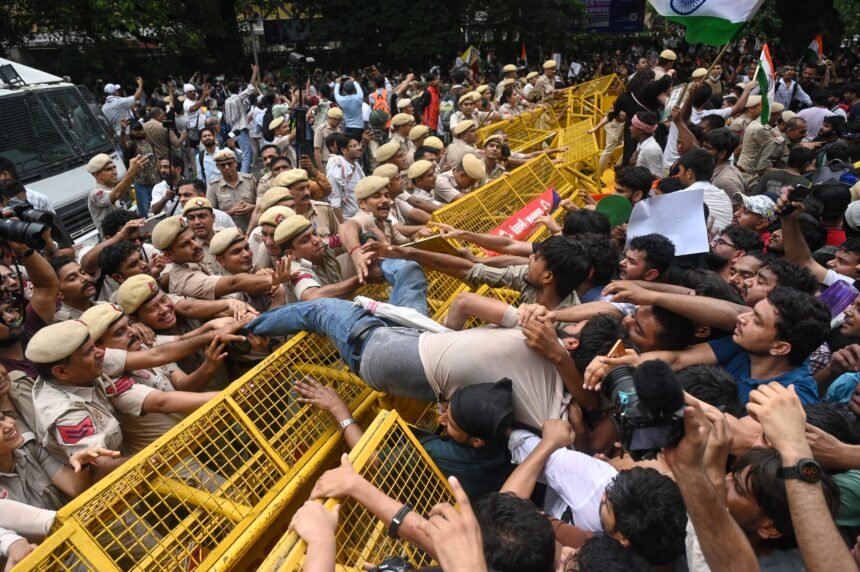
Led by Congress leader and Leader of the Opposition Rahul Gandhi, opposition lawmakers gathered outside Parliament dressed in black, holding placards and demanding the resignation of Education Minister Dharmendra Pradhan. The demonstration came a day after Gandhi was briefly detained by Delhi Police while leading a protest march to Prime Minister Narendra Modi’s residence, where he accused the government of suppressing student voices.
Inside Parliament, repeated protests by opposition MPs forced proceedings to be suspended as they demanded a discussion on both the alleged police crackdown against demonstrators and the examination controversies that sparked the movement. The coordinated action marked a significant escalation, bringing the issue from the streets of New Delhi directly into the country’s highest legislative forum.
The protests began after allegations of irregularities and paper leaks in national competitive examinations triggered widespread anger among students. Organised by the youth-led Cockroach Janta Party (CJP), the movement has called for the resignation of the education minister, greater accountability for the examination scandals, and comprehensive reforms to India’s recruitment and testing system.
What initially appeared to be a student campaign has rapidly evolved into a broader political challenge for Prime Minister Narendra Modi’s government. The opposition has seized on the issue, portraying it as evidence of institutional failures affecting millions of young Indians competing for limited educational and employment opportunities.
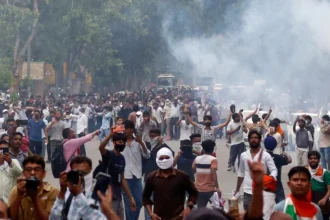
The government’s response has come under intense scrutiny as the protests continue to spread. Despite announcing arrests in the alleged paper leak cases, conducting re-examinations, and promising reforms to the examination system, demonstrations have been met with force in multiple cities. In Patna, police used tear gas, water cannons and lathi charges against protesters demanding the resignation of Education Minister Dharmendra Pradhan. The scenes echoed earlier clashes in New Delhi, where student demonstrators and opposition leaders were also confronted by police, further intensifying criticism of the government’s handling of the crisis.
Meanwhile, protesters have vowed to continue their sit-in at Delhi’s Jantar Mantar until their demands are addressed. The movement has attracted growing public attention, with supporters arguing that it represents deeper frustrations over governance, youth unemployment, and the credibility of India’s competitive examination system.
With Parliament disrupted, opposition leaders openly backing the demonstrations, and protesters refusing to end their campaign, the controversy has moved well beyond an education dispute. It has become a broader political test for the Modi government, one that could shape the national debate on accountability, democratic dissent, and the aspirations of India’s young population in the months ahead.