A Crisis Rooted in a Two-Year Political Process
The developments currently unfolding in Azad Jammu and Kashmir (AJK) must be understood in their proper context. The present unrest did not emerge overnight but is the culmination of a political process spanning more than two years, during which successive governments sought dialogue and implemented a substantial number of the Joint Awami Action Committee’s (JAAC) demands. According to official accounts, despite significant concessions and repeated offers of negotiations, the movement continued to escalate its protests over a constitutional issue that could only be resolved through legislative means.
From Economic Grievances to Wider Reforms
JAAC first came into prominence in May 2024 when it launched protests demanding subsidised electricity and lower flour prices. Responding to the movement, the Government of Pakistan announced financial support for the AJK Government, enabling electricity to be supplied at a flat rate of Rs 3 per unit. The AJK Government also reduced flour prices, providing what officials described as the lowest electricity tariff in Pakistan and across South Asia.
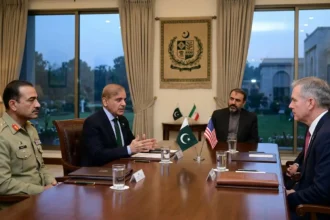
Building on this momentum, JAAC expanded its agenda. In 2025, it submitted a comprehensive 38-point charter of demands covering governance, development, administrative reforms and constitutional matters. Following the announcement of a proposed long march, a high-level committee constituted by the Prime Minister of Pakistan initiated multiple rounds of negotiations with JAAC representatives. According to the government, agreement was reached on all demands except one—the abolition of the 12 refugee seats in the AJK Legislative Assembly.
Significant Progress on the Charter of Demands
By early 2026, the government stated that 24 of JAAC’s 38 demands had been fully implemented, while another 13 were under process, subject to budgetary allocations. Among the key measures were the restoration of the Health Card scheme, reduction of property transfer fees from 29 per cent to 14 per cent, abolition of 5 kW electricity load charges for educational institutions, commencement of technical feasibility studies for an airport in AJK, completion of the Rathua Haryaam Bridge in Mirpur, and the submission of the Bank of AJK’s application for scheduled bank status to the State Bank of Pakistan.
Additional steps included the merger of departments, reinstatement of suspended employees, release of detained protesters and withdrawal of most First Information Reports. Members elected on refugee seats also resigned from ministerial positions, meaning no such members currently serve in the AJK Cabinet. In a document issued on 1 April 2026, JAAC itself acknowledged that many of its demands had been fulfilled either fully or partially.
The Constitutional Deadlock
The only unresolved issue remained JAAC’s demand to abolish the 12 seats reserved for refugees from Indian-Illegally occupied Kashmir in the AJK Legislative Assembly. The government maintained throughout that the matter was constitutional in nature and could not be resolved through executive orders or administrative decisions.
According to the AJK Government, the Supreme Court’s opinion confirmed that any change to the refugee seats required an amendment to the Azad Jammu and Kashmir Interim Constitution Act, 1974, which could only be passed by the Legislative Assembly. JAAC representatives were informed of these legal limitations and invited to participate in an All-Parties Conference in June 2026. They declined the invitation.
The Prime Minister of AJK also met JAAC representatives personally and urged them to contest the scheduled elections so they could pursue the constitutional amendment through the Assembly. However, JAAC rejected this proposal and instead reaffirmed its decision to proceed with a long march.
Escalation and Breakdown of Law and Order
As tensions increased, certain JAAC members publicly announced plans to occupy the Legislative Assembly, the Prime Minister’s House, the President’s House and other government buildings if their demands were not met. Faced with these declarations, the government decided to take preventive measures to safeguard public institutions and maintain law and order.
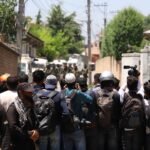
The situation deteriorated during the attempted arrest of JAAC leader Umar Nazir. According to official accounts, resistance during the operation resulted in the death of a supporter named Shazib, triggering widespread protests across AJK. Demonstrators subsequently gathered in Rawalakot, where attempts were made to occupy the Combined Military Hospital (CMH) and block public access. Security forces launched an operation to secure the facility, leading to casualties on both sides.
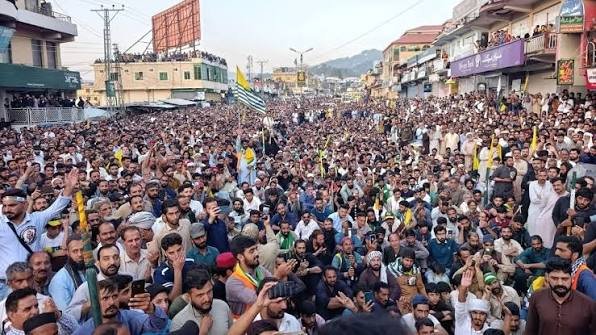
JAAC supporters later organised a prolonged sit-in at Darel Rawalakot that continued for nearly six weeks. During this period, schools remained closed, businesses were disrupted, markets shut down and the movement of essential goods was severely affected, causing hardship for local residents.
Elections and Renewed Confrontation
With Legislative Assembly elections scheduled for 27 July 2026, JAAC announced another long march a day earlier. On 27 July, protesters entered Rawalakot with the declared intention of marching towards Muzaffarabad. Security personnel intercepted the procession, resulting in violent clashes and multiple fatalities.
According to the government’s position, the confrontation could have been avoided had JAAC accepted constitutional and democratic avenues already offered through dialogue, negotiations and participation in elections. Officials argue that even if protesters had occupied government buildings, the refugee seats could not have been abolished without a constitutional amendment passed by the Assembly.
The events in AJK therefore represent not merely a law-and-order challenge but a constitutional impasse. The government maintains that democratic institutions remain the only legitimate forum for resolving constitutional questions and that any lasting solution must come through legislation rather than street mobilisation.