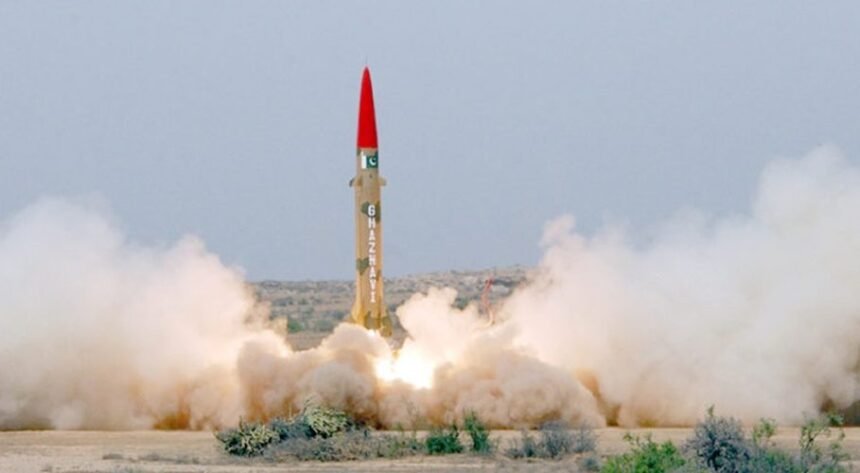
Every year on May 28, the hills of Chagai echo in the national memory. Known as Youm-e-Takbir (The Day of Greatness), this date marks the moment in 1998 when Pakistan conducted five successful nuclear tests, becoming the seventh nuclear armed nation in the world and the first in the Muslim world. Today, as Pakistan navigates a complex 21st century landscape, Youm-e-Takbir stands as a symbol of national unity and strength, reminding the world of a day when the entire nation stood behind a single, defiant purpose.
The Path to Chagai: A History of Necessity
The journey to nuclear capability was not born out of a desire for aggression, but from a desperate need for survival. Following the traumatic events of 1971 and India’s “Smiling Buddha” nuclear test in 1974, Pakistan found itself in a precarious security vacuum. The conventional military imbalance in the region meant that Islamabad required a “strategic equalizer” to prevent future conflicts and ensure territorial integrity.
This path was paved with immense hardships and sacrifice. The nation faced multitude of inherent problems including software (technologically sound scientists and technicians) and hardware (nuclear infrastructure). The problems got further compounded by India’s nuclear tests in 1974 and last breaths of “Atoms for peace program” by U.S.A. Hence, external pressures to join Non Proliferation Treaty and dearth of nuclear exporting material owing to international suspicion of Pakistan’s quest to attain nuclear weapon. Despite these hurdles, the people of Pakistan showed unparalleled resilience, viewing the nuclear program not just a strategic choice but a strategic necessity.
The Architect and the Leadership
History of Pakistan’s nuclear program seems incomplete without mentioning Dr. Abdul Qadeer Khan. Often hailed as the “Father of the Islamic Bomb,” Dr. Khan’s role was pivotal. After returning from Europe with expertise in centrifuge technology, he spearheaded the uranium enrichment process at KRL. Under his stewardship, Pakistan mastered the difficult task of enriching uranium, providing the necessary fuel for a nuclear reactor.
The success of 1998 is attributed to the long line of political and military leadership. Zulfikar Ali Bhutto famously vowed that the nation would “eat grass” if necessary to build the bomb, laying the foundation of the program. Over the decades, various leaders, including General Zia-ul-Haq, continued to provide the clandestine support and resources required. Ultimately, it was Prime Minister Nawaz Sharif who made the final, difficult decision to “go nuclear” in 1998, responding to India’s tests despite the threat of severe global consequences.
Deterrence: The Silent Guardian
In the realm of international relations, nuclear weapons are rarely viewed as tools of war, but rather as weapons of deterrence. The primary function of Pakistan’s nuclear arsenal is to ensure that war never happens. This concept, known as Mutually Assured Destruction (MAD), creates a “stability-instability paradox.” While low-level skirmishes may occur, the presence of nuclear weapons prevents these from escalating into full-scale, catastrophic wars.
Since 1998, this deterrence has been tested multiple times. During various standoffs, the nuclear threshold has acted as a cooling mechanism, forcing regional and international players to seek diplomatic resolutions rather than military ones. It has provided Pakistan with a “Full Spectrum Deterrence,” allowing the state to maintain its sovereignty against any aggression from India.
Geopolitical Relevance and Modern Diplomacy
Pakistan’s status as a nuclear power fundamentally altered its geopolitical relevance. It shifted the country from being a regional player to a global stakeholder. The responsibility of managing a nuclear arsenal required Pakistan to develop sophisticated command and control structures, enhancing its professional military standing and ensuring the safety of its assets.
Furthermore, being a nuclear power ensured that Pakistan could not be ignored in global discussions regarding South Asian security. It granted Islamabad a seat at the table in international forums, ensuring that its concerns regarding regional stability were heard by the Great Powers.
As the nation celebrates Youm-e-Takbir, the day serves as a stark reminder that sovereignty often comes at a high price, requiring a blend of scientific brilliance, political courage, and national unity. Decades after the dust settled at the Ras Koh Hills, the legacy of May 28 continues to define Pakistan’s identity as a resilient and formidable state on the world stage.