Prime Minister Shehbaz Sharif has reaffirmed that the recently signed Makkah Joint Defence Agreement between Pakistan, Saudi Arabia and Türkiye is aimed entirely at defence, deterrence and regional peace, stressing that the pact is not intended to promote aggression against any country. Speaking at a federal cabinet meeting on August 10, the prime minister said the agreement sought to strengthen cooperation among the three countries while promoting “peace, progress, and prosperity” in the region. He emphasised that its purpose was to ensure defence and stability rather than create conditions for conflict.
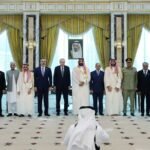
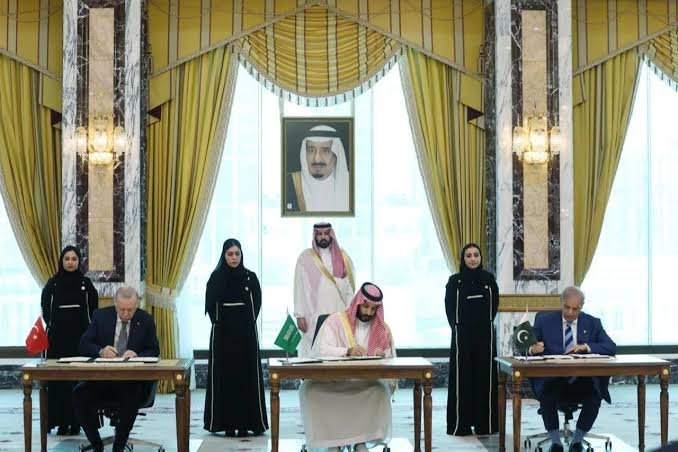
The Makkah Joint Defence Agreement was signed on August 7 by Prime Minister Shehbaz Sharif, Saudi Crown Prince Mohammed bin Salman and Turkish President Recep Tayyip Erdogan in Makkah. Under the agreement, an attack against any one of the three signatories would be treated as an attack against all three, establishing a framework for collective deterrence and defence.
Shehbaz described the agreement as a source of strength not only for Pakistan, Saudi Arabia and Türkiye but for the wider Muslim world. He also highlighted the longstanding defence relationship between Pakistan and Saudi Arabia, noting that the two countries had already formalised a Strategic Mutual Defence Agreement in September 2025.
🔈 PR No. 2️⃣0️⃣7️⃣/2️⃣0️⃣2️⃣6️⃣
— Ministry of Foreign Affairs – Pakistan (@ForeignOfficePk) August 10, 2026
Message to the Nation by the Deputy Prime Minister/Foreign Minister Senator Mohammad Ishaq Dar @MIshaqDar50 on the Signing of the Makkah Joint Defence Agreement
🔗⬇️ pic.twitter.com/KY5vao3SFt
The prime minister further pointed to Pakistan’s longstanding security relationship with Türkiye, saying Islamabad and Ankara had maintained defence arrangements for decades. According to him, Friday’s trilateral agreement represents an extension of these existing relationships into a more formal framework of collective defence. The agreement also builds on Pakistan’s historical role in supporting the security of Islam’s holiest sites. Shehbaz recalled that Pakistani forces had, alongside Saudi forces, helped defend Makkah and Madina over the years. He described the new agreement as another extension of this longstanding cooperation.
Deputy Prime Minister and Foreign Minister Ishaq Dar separately reiterated that the pact was defensive in nature and was not directed against any particular country. He said its provision treating an attack on one member as an attack on all three was consistent with the inherent right of individual and collective self-defence recognised under Article 51 of the United Nations Charter.
The agreement has received a positive response from several countries and organisations. The Organisation of Islamic Cooperation, representing 57 member states, described it as an “important strategic step”. Kuwait, Bahrain and Somalia have also welcomed the agreement, while Iran’s response emphasised the importance of regional security mechanisms based on cooperation among countries in the region.
For Pakistan, Saudi Arabia and Türkiye, the pact marks a significant step in formalising defence cooperation while presenting collective security as a means of strengthening stability rather than pursuing confrontation. Its stated emphasis on deterrence and self-defence will likely remain central to how the three countries explain the agreement to the wider region and international community.