As an outcome of changing South Asian geopolitics, Pakistan transformed itself from a target of aggression from hostile actors to a cornerstone of international mediation. Just within a year, Pakistan not only succeeded in projecting itself as a defender of its land, but it has also secured its position as a net-security provider of the region. The whole paradigm has shifted from the defensive triumph of Operation Bunyan-ul-Marsoos to the diplomatic breakthrough of the Islamabad Talks.
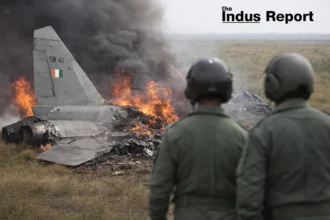
The story begins with India’s cowardly attack that threatened to ignite a full-scale regional war. In May 2025, India carried out missile strikes, under the banner of Operation Sindoor, into Pakistan airspace, targeting civilians and children. India staged a false-flag operation in Pahalgam in Indian Occupied Kashmir to frame these strikes as domestic political theatre designed to bolster a specific voter bank under the guise of national security.
India miscalculated Pakistan’s response to this aggression, assuming that either it will absorb the strikes in silence or it will appeal to the United Nations. Breaking all expectations, Pakistan launched Operation Bunyan-ul-Marsoos aimed to go for surgical and calibrated military strikes in mainland India. These strikes were accurate and precise, acting as a true deterrent against India’s future aggression.
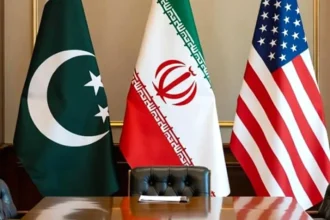
Pakistan not only succeeded in establishing deterrence, it also acted as a responsible state by showing restraint. By walking back down the escalation ladder on its own terms, as a confident state it has also showed the world that it possesses strategic patience. While helping to secure borders, the operation has also helped Pakistan to establish the foundational credibility required for the diplomatic maneuvers as evidenced in the US-Iran talks held in Islamabad.
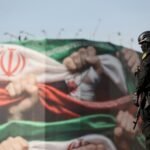
While the dust was settling on the Eastern front, a more existential threat to global security and stability emerged on the Western side with the rapidly escalating conflict between the United States and Iran. In the start of 2026, the all-out war broke out in the region that threatened the closure of the Strait of Hormuz and to choke global energy supplies.
When it came to cool down tensions in the Middle East, the traditional mediators of the Gulf region were the epicenter of the conflict and NATO members lacked the necessary leverage with Tehran. This vacuum is immediately covered by Pakistan. Moreover, the US and Iran also needed a safe exit route but could not find one without losing face, so they also trusted Pakistan as a vital mediator in the conflict. Therefore, Islamabad helped to break the deadlock between the conflicting parties and provided a platform for a ceasefire agreement that pulled the world back from the brink of catastrophe.
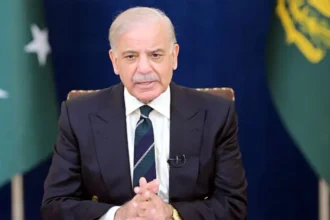
The traditional narrative that states with powerful militaries are inherently untrustworthy as mediators is challenged with the success of Islamabad talks. In addition, Pakistan’s demonstration of successful military resolve in Operation Bunyan-ul-Marsoos acted as a security guarantee. Furthermore, the mediation remained successful because of the civilian as well as military diplomatic channels were used while negotiating. The civilian channel provided the public face of the negotiations and ensured diplomatic legitimacy and international transparency. Meanwhile, military leadership ensured the operational trust, especially for a state like Iran which views security through a lens of strategic depth and the US which has a long history of boots on the ground mechanism. Thus, the backbone of this these mediations was the hybrid diplomacy including military and civil channels.
With the help of these acute diplomatic maneuvers, Pakistan transformed itself into a broker state while projecting itself as a net-security provider and an emerging regional power. It has removed all the old scars of hub of instability and insecurity with the events of 2025-2026.
Pakistan has shown that it is a highly integrated state with coherent system by managing a high-stakes border conflict with India through utmost restraint and subsequently facilitating peace between two arch-rivals, the US and Iran. It is a state where the military, the government and the diplomatic institute is centralized that has allowed Islamabad to deliver what more traditionally neutral states failed to do so.
Therefore, Pakistan’s trajectory from May 2025 to May 2026 serves as a master class in modern statecraft with the acumen of its civil and military leadership. Pakistan was struck by external aggression, but it not only gave proportionate response to the aggression, it also forged a new identity of identity of a regional stabilizer.
As the negotiations are ongoing, all eyes are stick on Pakistan as it can help to resolve the conflict by providing favorable agreement acceptable for both conflicting parties. President Trump is scheduled to visit China this week and this is a great opportunity to push for the agreement. If Pakistan helped to secure agreement, President Trump might visit Islamabad after China’s visit to sign the agreement.