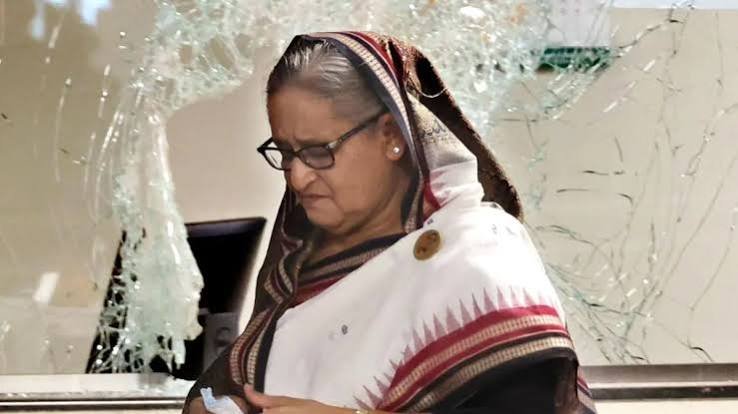
Bangladesh has delivered one of its strongest diplomatic protests against India after ousted Prime Minister Sheikh Hasina was allowed to address journalists in New Delhi, pushing already strained bilateral relations to a fresh low.
Speaking on the second anniversary of the student-led uprising that forced her from power in August 2024, Hasina vowed to return to Bangladesh in December despite having been convicted by Bangladesh’s International Crimes Tribunal and sentenced to death on charges of crimes against humanity. “Whatever fate awaits me, I will return to my people,” she declared, insisting that her personal safety was no longer a consideration.
Dhaka reacted angrily, accusing India of providing a platform to what it described as a “convicted genocider” and of undermining efforts to rebuild bilateral relations. Bangladesh’s foreign ministry said it was “outraged” that Hasina had been permitted to participate in the event, accusing her and her allies of directing “venomous vitriol” against Bangladesh and its people. It called the interaction an affront to Bangladesh’s sovereignty and renewed its demand for Hasina’s extradition.
The controversy is particularly significant because India had previously maintained tight control over Hasina’s public activities after granting her refuge. When Bangladesh formally requested her extradition earlier this year under the 2013 India-Bangladesh Extradition Treaty, New Delhi declined. Yet India now finds itself explaining why the former leader was able to make such provocative political remarks from Indian soil. New Delhi has attempted to distance itself from the event, saying it neither organised the news conference nor endorsed the political views expressed. But the episode has inevitably raised questions about India’s approach to Bangladesh following the fall of a government that had been one of its closest regional partners.
The timing is also politically significant. After the election of BNP leader Tarique Rahman, there were hopes that India would reassess its longstanding reliance on the Awami League and pursue a more balanced relationship with Bangladesh. Those expectations have weakened further following Tarique’s visit to China, where he described Beijing as Bangladesh’s “most valued and trusted partner.”
The broader lesson for New Delhi is that Bangladesh is increasingly asserting an independent foreign policy. Attempts to treat South Asian neighbours as subordinate partners risk accelerating the very strategic drift India seeks to prevent.For India, rebuilding influence in Bangladesh will require less political paternalism and more respect for sovereignty, pluralism and Dhaka’s right to maintain diversified partnerships.