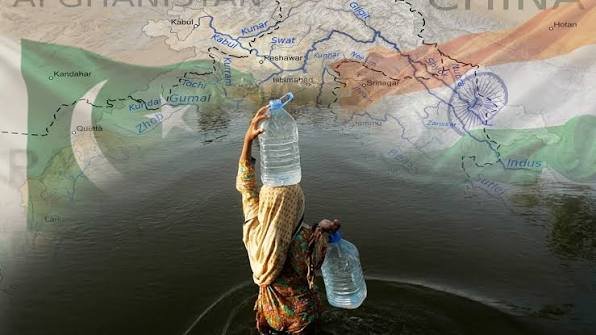
One and a half years since India announced that the treaty is put “in abeyance” due to the Pahalgam attack in April 2025, the treaty still remained stuck in some sort of strange legal purgatory, which cannot be defined either as being legally abolished or functioning as intended. It becomes necessary to distinguish between what is happening on the ground, what international law says about it, and what each party’s logic tells us about the further development of the dispute.
Pakistan is facing more procedural effects than physical ones. India has stopped the Permanent Indus Commission and withheld all hydrological data from the Pakistani government, denying it access to the data of reservoirs and discharges which it needs for planning. It has not diverted any water above the allotted quantity, mainly because of the absence of infrastructure for doing so. This data withholding, although not amounting to diversion, poses a very real threat to the agricultural industry of Pakistan which depends greatly on the Indus system.
Whereas it is supposed to be clear, the legal scenario has gotten even more complicated. Several decisions were made by the Permanent Court of Arbitration till 2025 and May 2026, stating that India’s suspension does not have any relevance to the ongoing cases and that the treaty still holds legal value according to customary international law of pacta sunt servanda. On the other hand, Pakistan contended that there is no suspension clause in the treaty and that Article XII can be modified only via a mutual consent. India, however, totally denied those decisions and considered the court unconstitutional, saying that the suspension will continue until Pakistan stops cross-border terrorism. Indeed, the architecture of dispute resolution has led to decisions which have been in the favor of both sides at various points in time. As an illustration, the Court of Arbitration decided in May 2026 in favor of Pakistan with regard to the maximum pondage issue, but in April 2026 the Neutral Expert gave an award which has largely favored India’s technical interpretations of its hydro power plants.
The difference between these approaches bears relevance to how the controversy needs to be interpreted. The Indian approach is based on an external logic of security concerns, whereas the Pakistani stance on the basis of fidelity to procedure and to the language of the treaty. Both perspectives have a certain legal standing from a perspective of their own. This point, however, does not mean that India will regain its cooperation with the other side despite the evident legal advantage of Pakistan at international tribunals.
But what this deadlock reveals ultimately is something else: It reveals the greater weakness common to all water regimes based on treaty, which is that while the law may afford some degree of sustainability, this becomes meaningless when one side does not mind damaging its reputation in order to gain some sort of advantage.